

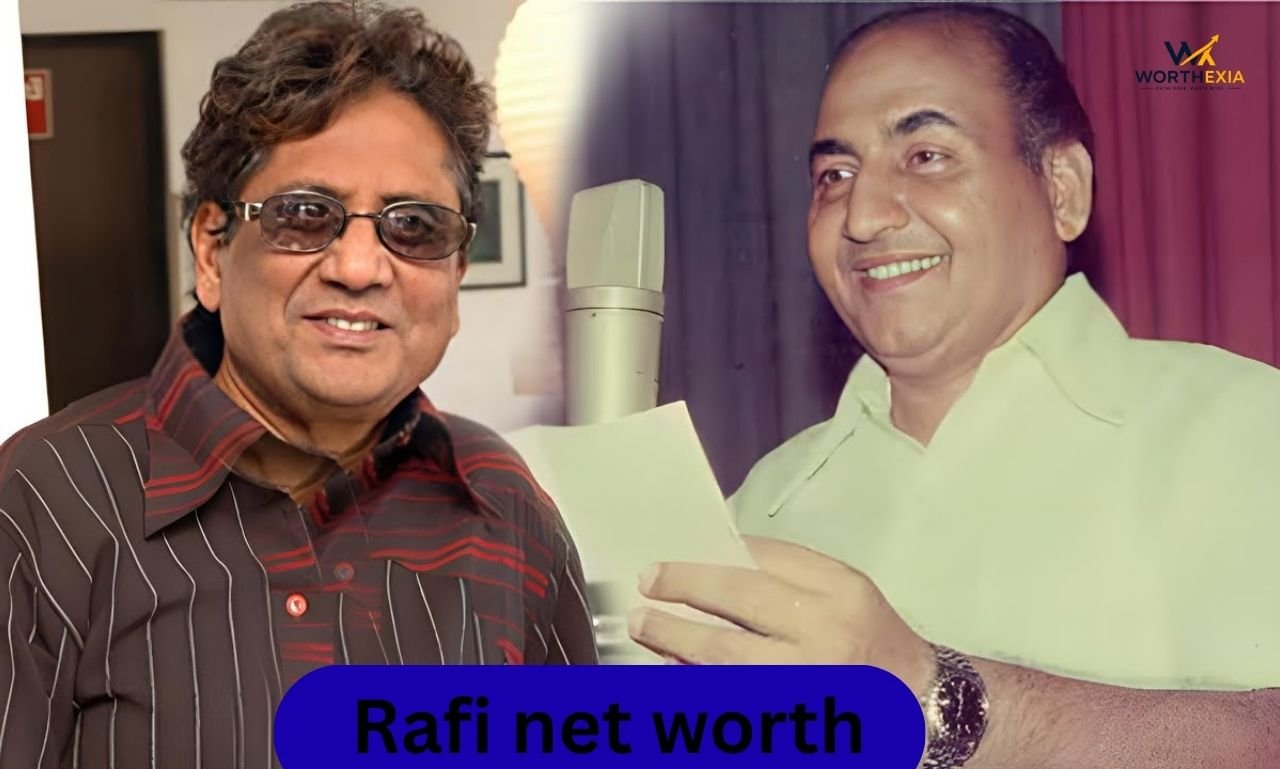
Mohammed Rafi was one of the most celebrated playback singers in Indian cinema, with a career that lasted from the 1940s until he died in 1980. His work across Hindi and other Indian-language films made him one of the most recognizable voices of his generation.
When people search for “Rafi net worth,” however, there is an important complication: Mohammed Rafi’s exact personal net worth was never publicly documented in a reliable financial statement. Some modern websites publish estimates in the $20 million to $30 million range, but those figures are third-party estimates and should not be treated as verified facts.
Rafi died on July 31, 1980, at the age of 55, so a “current net worth” figure is also misleading. His financial story is better understood through his lifetime earnings, property and assets, estate, and any posthumous income associated with his recorded work.
Quick Facts About Mohammed Rafi
Fact Details
Full Name: Mohammed Rafi
Known As Mohammed Rafi, Mohd. Rafi
Born December 24, 1924
Birthplace: Kotla Sultan Singh, Punjab, British India
Died July 31, 1980
Age at Death: 55
Profession Playback Singer
Active Years 1944–1980
Main Ind: Indian film and playback music
Children 7
Major Honour: Padma Shri, 1967
Filmfare Awards 6
National Film Award 1
Focus Keyword: rafi net worth
Rafi Net Worth: What Is Actually Known?
There is no reliable public financial record that establishes Mohammed Rafi’s exact net worth at the time of his death.
Some online publications and celebrity-wealth websites have placed his wealth in the range of approximately $20 million to $30 million. However, these figures are not supported by a publicly available estate statement, audited financial disclosure, or authoritative valuation of his property and music-related rights.
For that reason, it is more accurate to describe $20 million to $30 million as a reported online estimate rather than a confirmed figure.
This distinction matters because Mohammed Rafi died in 1980. His estate at that time cannot simply be converted into a “2026 net worth” without knowing the value of his assets, liabilities, property, rights, and other financial interests.
A responsible summary is:
Mohammed Rafi’s exact net worth is not publicly verified. Online estimates commonly place his wealth in the tens of millions of dollars, but these figures should be treated as unverified estimates rather than documented fact.
Why Mohammed Rafi’s Wealth Is Difficult to Calculate
Calculating the wealth of a singer who died more than four decades ago is considerably more complicated than estimating the wealth of a living celebrity.
Several factors make Rafi’s financial history difficult to reconstruct.
His Earnings Were Generated Decades Ago
Most of Rafi’s major professional success occurred during the golden era of Indian film music. Recording fees, contracts, taxation, property prices, and investment values from that period cannot simply be converted into a modern celebrity net-worth calculation.
His Estate Is Different From His Lifetime Earnings
The amount Rafi earned throughout his career is not the same thing as the value of everything he owned when he died.
Lifetime income would include money earned from singing and other professional activities. Estate value would instead concern assets remaining after expenses, taxes, liabilities, and other obligations.
Posthumous Income Is Difficult to Verify
Recorded music can continue generating commercial value after an artist’s death. However, determining how much money actually reached an artist’s estate requires information about ownership, contracts, licensing arrangements, publishing rights, and royalty structures.
Public sources do not provide enough information to calculate Mohammed Rafi’s posthumous income accurately.
Modern music artists can also build wealth through multiple revenue streams, including recording, production, royalties, touring, and commercial opportunities, as discussed in our detailed breakdown of Zedd’s net worth.
Inflation Changes the Meaning of Historical Wealth
A large amount of Indian rupees in 1980 does not have the same purchasing power as the same numerical amount today.
An inflation-adjusted figure would therefore be a different calculation from Rafi’s historical estate value. Without reliable documentation of the original estate, even an inflation-adjusted estimate would remain uncertain.
How Mohammed Rafi Made His Money
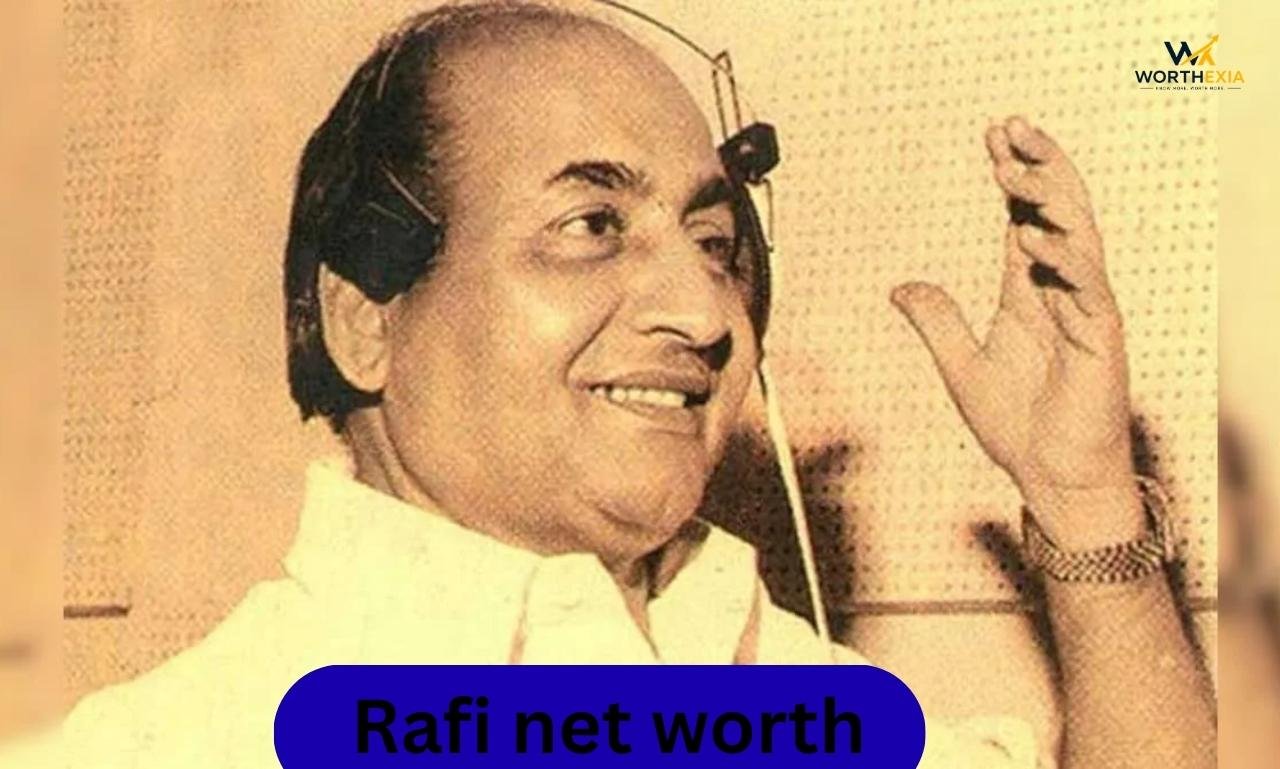
Mohammed Rafi’s career was primarily built around professional singing and recording work.
Playback Singing
Playback singing was the central source of Rafi’s professional income.
He provided voices for actors in hundreds of Indian films and became particularly well known for his ability to adapt his singing style to different characters, musical genres, and composers.
His career included romantic songs, classical compositions, patriotic music, qawwalis, bhajans, ghazals,als and lighter film songs.
Film Recording Work
Rafi earned money by recording songs for films. His career began when the Indian film industry was developing into a major commercial entertainment business, and he eventually became one of its most in-demand male playback singers.
An Indian Express retrospective reported that Rafi recalled being paid Rs. 75 for a song during the early part of his career. That historical figure illustrates how dramatically the economics of his profession changed as his career progressed.
Possible Posthumous Revenue
Rafi’s recorded catalogue has continued to be commercially relevant after his death.
Music can generate revenue through licensing, re-releases, streaming, compilations, broadcasting, and other uses. However, the exact amount received by Rafi’s heirs or estate from these sources is not publicly documented in a way that allows a reliable annual figure.
Therefore, posthumous royalties should be described as a possible source of continuing estate income rather than a confirmed amount.
Property and Other Assets
Rafi’s wealth was not necessarily limited to income from singing.
Like other successful entertainers of his generation, his financial position could have included property, personal possessions, savings, and other investments. However, comprehensive public documentation of his complete asset portfolio is unavailable.
It would therefore be misleading to assign precise values to his properties or investments without reliable historical records.
Lifetime Wealth vs. Estate Value vs. Posthumous Earnings
These three concepts are often confused when discussing Rafi’s net worth.
Lifetime Wealth
Lifetime wealth refers broadly to the financial resources accumulated during Rafi’s life.
His career generated income through professional singing and film recordings, but the total amount earned over his entire career has not been reliably documented in publicly available sources.
Diplo provides another example of how a successful music career can generate wealth through DJ performances, production, songwriting, royalties, business interests, and other entertainment opportunities.
Estate Value
Estate value refers to the assets and financial interests left behind when Rafi died in 1980, after accounting for relevant liabilities and obligations.
This is the most appropriate historical concept when discussing his wealth at the end of his life.
Posthumous Earnings
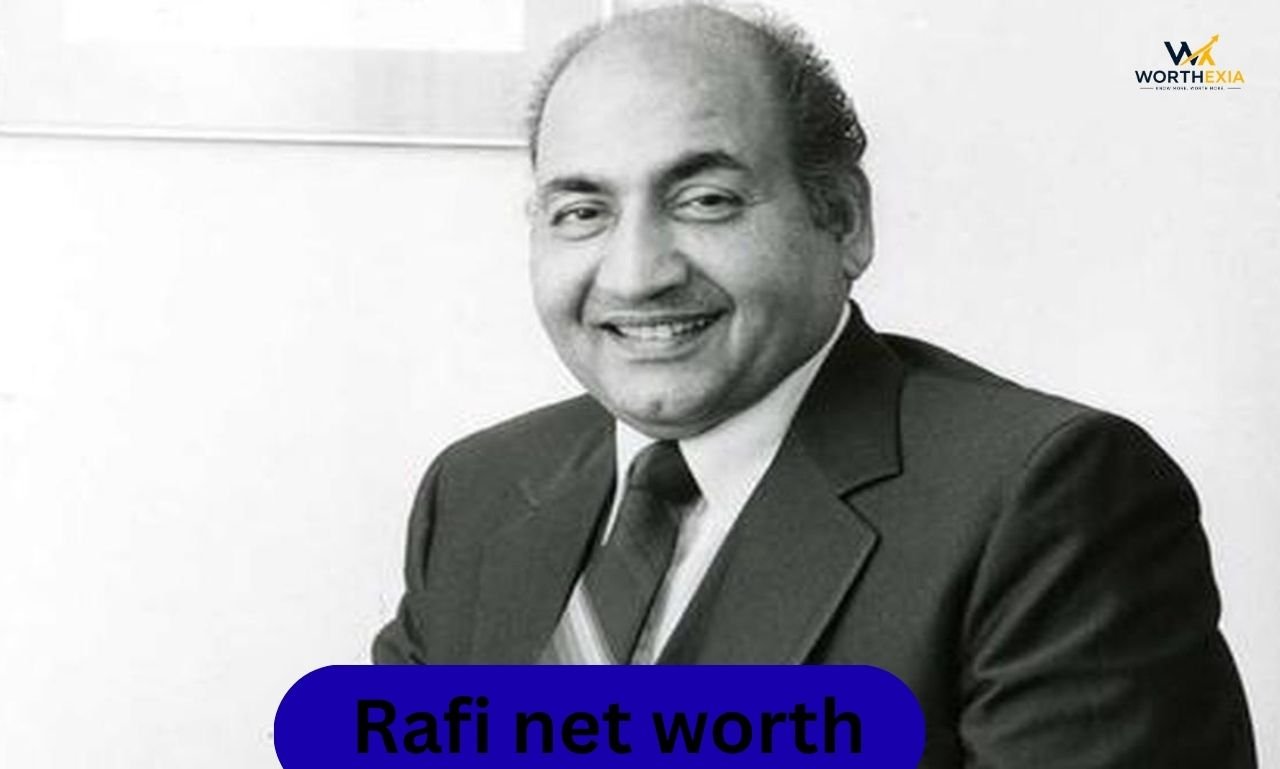
Posthumous earnings refer to money potentially generated after his death from the continued commercial use of his recordings and other rights.
Those earnings belong to the relevant rights holders and estate arrangements and should not automatically be presented as Mohammed Rafi’s personal “current net worth.”
Early Life and Musical Training
Mohammed Rafi was born on December 24, 1924, in Kotla Sultan Singh, Punjab, then part of British India. His family later moved to Lahore, where Rafi spent part of his youth.
As a young boy, Rafi became fascinated by the singing of a travelling fakir. His interest in music developed from there, and he eventually received formal musical training.
The Indian Express has reported that Rafi trained in classical music and later described Ustad Abdul Waheed Khan as one of his teachers. His early musical development helped establish the technical foundation for the broad range of styles he would later perform.
Before becoming a major film singer, Rafi also performed publicly. His early experiences in Lahore helped introduce him to professional musical circles.
Because the search term “Rafi net worth” can also surface information about Canadian singer Raffi Cavoukian, readers should distinguish those results from information about Indian playback singer Mohammed Rafi.
Mohammed Rafi’s Career Journey
Rafi’s professional career developed during a period when Indian cinema and recorded music were expanding rapidly.
Early Career
Rafi’s early work included Punjabi film music before he established himself in Bombay’s Hindi film industry.
Sources commonly identify “Soniye Nee, Heeriye Nee” from the Punjabi film Gul Baloch as an early playback recording, although sources differ in how they describe its recording and release dates.
He moved to Bombay in the 1940s and began building relationships with composers and filmmakers.
Breakthrough in Hindi Cinema
Rafi’s career gained major momentum through Hindi cinema. His work with composers such as Naushad helped establish him as a leading playback singer.
His performance in Baiju Bawra was particularly important to his rise. Songs from the film helped demonstrate his ability to handle demanding classical material while still connecting with a mass audience.
The Golden Era
During the 1950s and 1960s, Rafi became one of the dominant male voices in Hindi film music.
He worked with major composers including:
- Naushad
- O. P. Nayyar
- Shankar-Jaikishan
- S. D. Burman
- Madan Mohan
- Ravi
- Laxmikant-Pyarelal
He also became strongly associated with actors including Shammi Kapoor, Dilip Kumar, Dev Anand, Dharmendra and Rishi Kapoor through playback performances.
Later Career
Rafi continued recording music into the 1970s.
One of his most notable late-career successes was “Kya Hua Tera Wada” from Hum Kisise Kum Naheen. The song earned him the National Film Award for Best Male Playback Singer and a Filmfare Award.
Mohammed Rafi’s Major Awards and Achievements
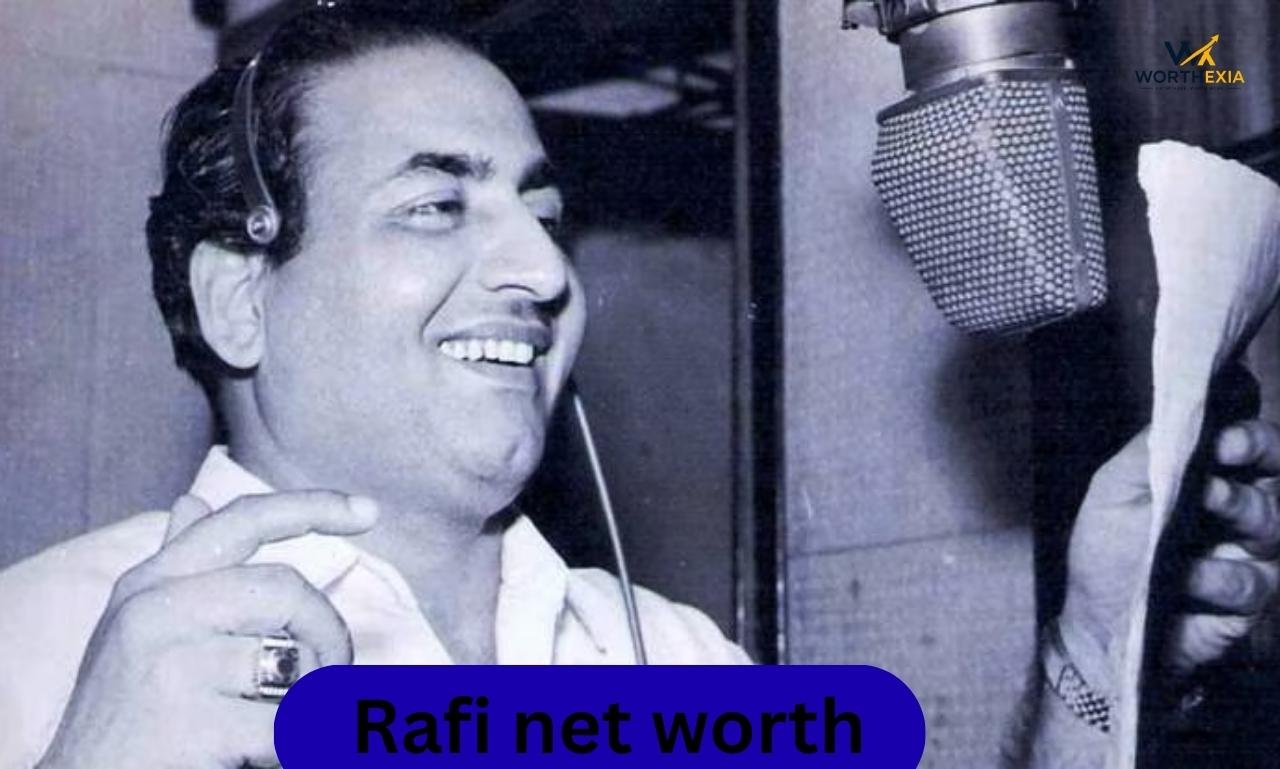
Rafi’s career was recognized with several major honors.
Filmfare Awards
Mohammed Rafi won six Filmfare Awards for Best Male Playback Singer during his career. His first Filmfare win came in 1960 for “Chaudhvin Ka Chand Ho.”
His Filmfare-winning performances included songs from films such as:
- Chaudhvin Ka Chand
- Sasural
- Dosti
- Suraj
- Brahmachari
- Hum Kisise Kum Naheen
National Film Award
Rafi received the National Film Award for Best Male Playback Singer for “Kya Hua Tera Wada” from Hum Kisise Kum Naheen.
The song was released in 1977, and contemporary retrospective sources identify the National Award as one of the major honors of his career.
Padma Shri
The Government of India honored Mohammed Rafi with the Padma Shri in 1967 for his contribution to the arts. The honor is also recorded by major biographical sources.
Mohammed Rafi’s Musical Style and Influence
Rafi’s financial success cannot be separated from the characteristics that made his professional career unusually broad.
He was able to sing across very different musical formats, including:
- Romantic songs
- Classical compositions
- Bhajans
- Ghazals
- Qawwalis
- Patriotic songs
- Comic songs
- Sad songs
- Dance-oriented film numbers
His ability to change vocal expression according to the actor, character, and musical composition helped him remain relevant across different phases of Hindi cinema.
This versatility also explains why his recordings continued to attract listeners long after his death.
Mohammed Rafi’s Personal Life and Family
Mohammed Rafi married twice and had seven children. His first marriage was affected by the upheaval surrounding Partition, while his later family life was based in India.
Rafi was known publicly for maintaining a relatively modest personal image despite his enormous professional success.
His family and estate became part of his posthumous legacy, particularly as his recordings continued to be heard by new generations.
Because detailed financial information about individual family members and inheritance arrangements is not consistently available from authoritative public sources, it is better not to assign specific inheritance amounts without documentation.
Assets and Estate
There is not enough reliable public information to create a complete balance sheet of Mohammed Rafi’s estate.
A responsible discussion of his estate should therefore distinguish between documented facts and assumptions.
What Can Be Discussed
His estate could have included:
- Personal property
- Savings
- Real estate
- Music-related rights or interests
- Royalties or other contractual income
- Personal possessions
What Cannot Be Reliably Confirmed?
There is no sufficiently documented public source establishing:
- The exact total value of his estate
- The exact value of every property he owned
- The total amount inherited by individual family members
- His exact lifetime income
- His exact posthumous royalty income
- A verified modern-dollar net-worth figure
This is why websites giving a single precise number for Rafi’s net worth should be treated cautiously.
Rafi Net Worth Timeline
Period Career and Financial Context
1924–1930s Born in Punjab and developed an early interest in singing
Early 1940s Began professional work in film music
1940s–1950s Established himself in Bombay’s growing Hindi film industry
1::950s Breakthrough and growing demand as a playback singer
1960s Peak period of commercial and artistic recognition
196::7 Received the Padma Shri
1970s: Continued recording and earned major awards
1977 Won Filmfare and National Film Award recognition for “Kya Hua Tera Wada”
1980 Died at age 55
After 1, recordings continued to circulate and generate cultural and potential commercial value
How Many Songs Did Mohammed Rafi Sing?
There is no universally agreed public number for the total number of songs Mohammed Rafi recorded.
Some sources cite around 7,000 songs, while other accounts have reported substantially higher numbers. Because the methodology behind these counts varies, the safest description is that Rafi left behind an extensive catalogue of recordings across multiple languages and musical styles.
This is preferable to presenting one exact song count as an undisputed fact.
What Made Mohammed Rafi Financially Successful?
Rafi’s professional success was supported by several factors.
High Demand
He became one of the most sought-after playback singers in Indian cinema.
Musical Versatility
His ability to perform different genres allowed him to work across a wide range of films and composers.
Long Career
His professional career lasted roughly three and a half decades, giving him many years of earning opportunities.
Strong Industry Relationships
His collaborations with major composers and actors helped maintain his position in the film industry.
Enduring Catalogue
His recordings remained popular after his death, giving his work a long cultural life and potentially creating continuing commercial value.
Why Online Rafi Net Worth Estimates Differ
Different websites can publish very different figures because they may use different assumptions.
One website might estimate wealth based on career income. Another might include property values. A third may attempt to estimate royalties or convert historical wealth into modern currency.
The problem is that complete financial records rarely support these calculations.
For Mohammed Rafi, the safest approach is therefore to distinguish between:
Verified: dates, career, awards and publicly documented biographical information.
Reported: online estimates of his wealth.
Unknown: exact estate value, lifetime income, inheritance amounts and posthumous royalty income.
This approach provides a more accurate picture than presenting an unsupported number as fact.
Mohammed Rafi and the Search Term “Raffi”
An important search-intent issue is that “Rafi” can refer to more than one singer.
Canadian singer and songwriter Raffi Cavoukian is sometimes listed online under the search term “Raffi net worth.” Mohammed Rafi, the Indian playback singer, is a completely different person.
This article is specifically about Mohammed Rafi, the Indian playback singer who lived from 1924 to 1980.
That distinction is important because some search results for “Rafi net worth” may contain financial information about Raffi Cavoukian instead.
Interesting Facts About Mohammed Rafi
- Mohammed Rafi was born on December 24, 1924.
- He died on July 31, 1980, at the age of 55.
- His family moved to Lahore during his childhood.
- He developed an interest in singing after hearing a travelling fakir perform.
- He received classical music training.
- His career included Hindi and other Indian-language recordings.
- He won six Filmfare Awards.
- He received one National Film Award.
- The Government of India awarded him the Padma Shri in 1967.
- His recordings covered romantic, classical, devotional, patriotic, and comic styles.
Frequently Asked Questions About Rafi Net Worth
What was Mohammed Rafi’s net worth?
Mohammed Rafi’s exact net worth has not been publicly verified. Some websites have reported estimates in the $20 million to $30 million range, but there is no publicly available financial documentation that independently confirms those figures.
Was Mohammed Rafi a millionaire?
It is reasonable to describe Rafi as a highly successful and financially established entertainer, but an exact millionaire status or dollar amount at the time of his death cannot be established from reliable public financial records.
How did Mohammed Rafi make his money?
His primary professional income came from playback singing and film recording work. He recorded songs for numerous Indian films and worked with many of the industry’s leading composers and filmmakers.
Did Mohammed Rafi earn money from royalties?
His recordings may have generated posthumous commercial income through licensing, reissues, broadcasts, and other uses. However, the exact amount of royalty income received by his estate is not publicly documented well enough to provide a reliable figure.
Did Mohammed Rafi own property?
Rafi’s financial position may have included property and other assets, but a complete publicly verified inventory and valuation of his estate is not available.
Who inherited Mohammed Rafi’s wealth?
Mohammed Rafi left a family including seven children. However, publicly available sources do not provide enough authoritative financial documentation to state an exact inheritance amount for each family member.
Why do websites give different Rafi net worth figures?
Different websites use different assumptions about historical earnings, property, investments, royalties, and inflation. Because there is no publicly verified complete balance sheet, online net-worth figures can vary significantly.
Is the $20 million to $30 million Rafi net worth figure confirmed?
No. It should be treated as an online estimate rather than a verified financial figure.
What awards did Mohammed Rafi win?
Rafi won six Filmfare Awards and one National Film Award. He was also awarded the Padma Shri by the Government of India in 1967.
When did Mohammed Rafi die?
Mohammed Rafi died on July 31, 1980, in Mumbai at the age of 55.
How many songs did Mohammed Rafi record?
Sources provide different estimates, with some citing around 7,000 and others giving considerably higher figures. Because song-count methodology varies, it is safer to describe his output as an extensive catalogue rather than claim one definitive total.
Final Thoughts on Rafi Net Worth
Mohammed Rafi’s financial legacy is difficult to reduce to one precise number.
Although online sources sometimes estimate his wealth at $20 million to $30 million, those figures are not supported by a publicly verified financial statement. His exact lifetime earnings, estate value, property holdings, inheritance arrangements, and posthumous royalty income are not sufficiently documented to produce a definitive modern net-worth figure.
What can be established with much greater confidence is the scale of his professional career. Rafi worked in Indian playback music from the 1940s until 1980, earned six Filmfare Awards and a National Film Award, and received the Padma Shri in 1967. His recordings continue to be heard decades after his death.
For that reason, the most accurate way to discuss RaRaRaRafi’s wealth is not to present an unsupported number as fact, but to explain the uncertainty surrounding his historical wealth while documenting the career that made him one of India’s most enduring playback singers.
1 thought on “Rafi Net Worth: Career, Income, Wealth and Legacy Explained”